

Ingredients
Ingredients
Farming Practices & Certifications
Farming Practices & Certifications
Sustainable Wheat Farming, GLOBAL G.A.P. Certified, Locally Milled, Traceable Ingredients
Shipping & Delivery
Shipping & Delivery
Orders from 3 Farm Daughters ship directly from their farm. Shipping times and delivery policies are set by the farm and may vary based on location and order volume.
Whole Omega
Whole Omega
Couldn't load pickup availability
Ingredients
Ingredients
Farming Practices & Certifications
Farming Practices & Certifications
Sustainable Wheat Farming, GLOBAL G.A.P. Certified, Locally Milled, Traceable Ingredients
Shipping & Delivery
Shipping & Delivery
Orders from 3 Farm Daughters ship directly from their farm. Shipping times and delivery policies are set by the farm and may vary based on location and order volume.

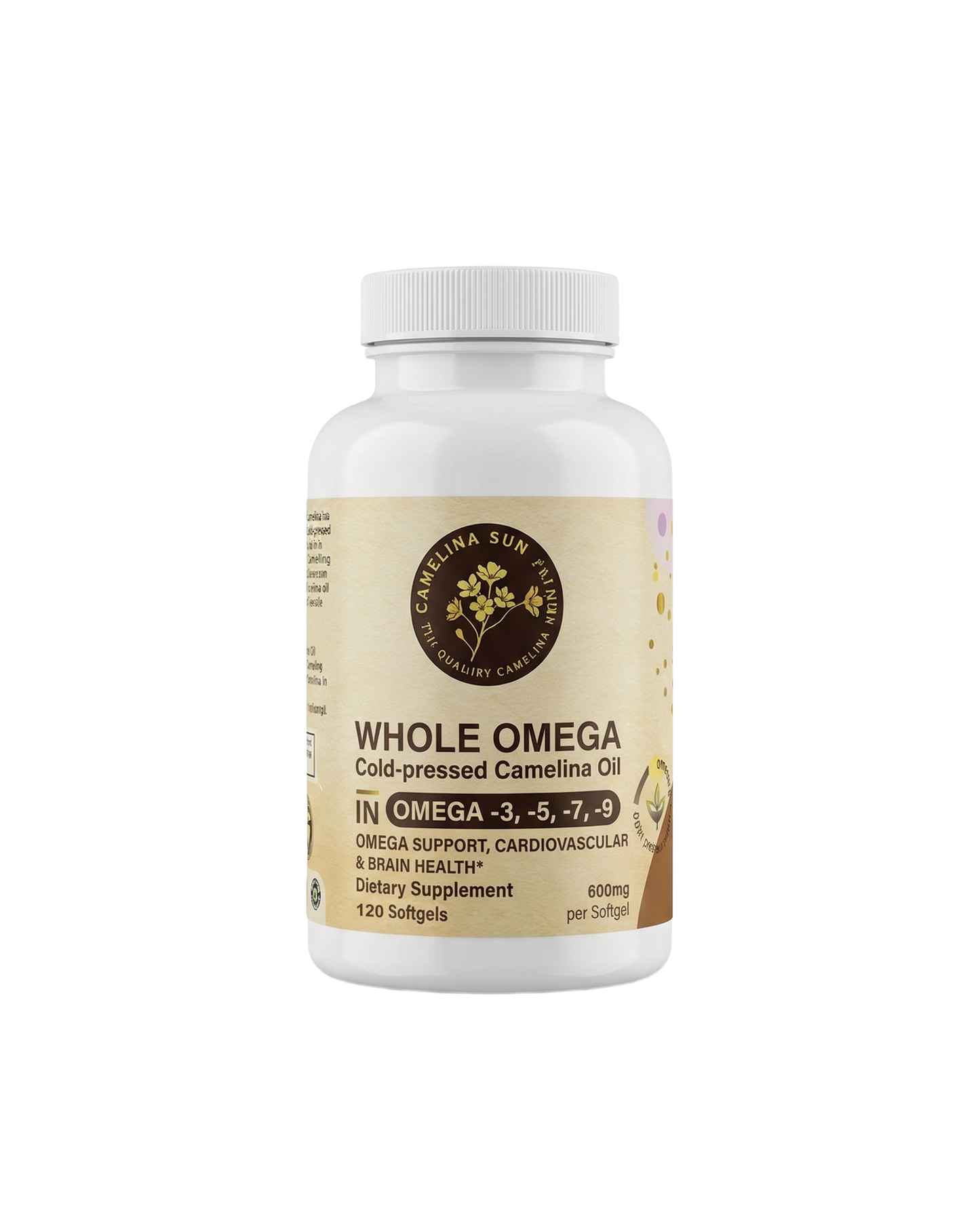

Whole Omega

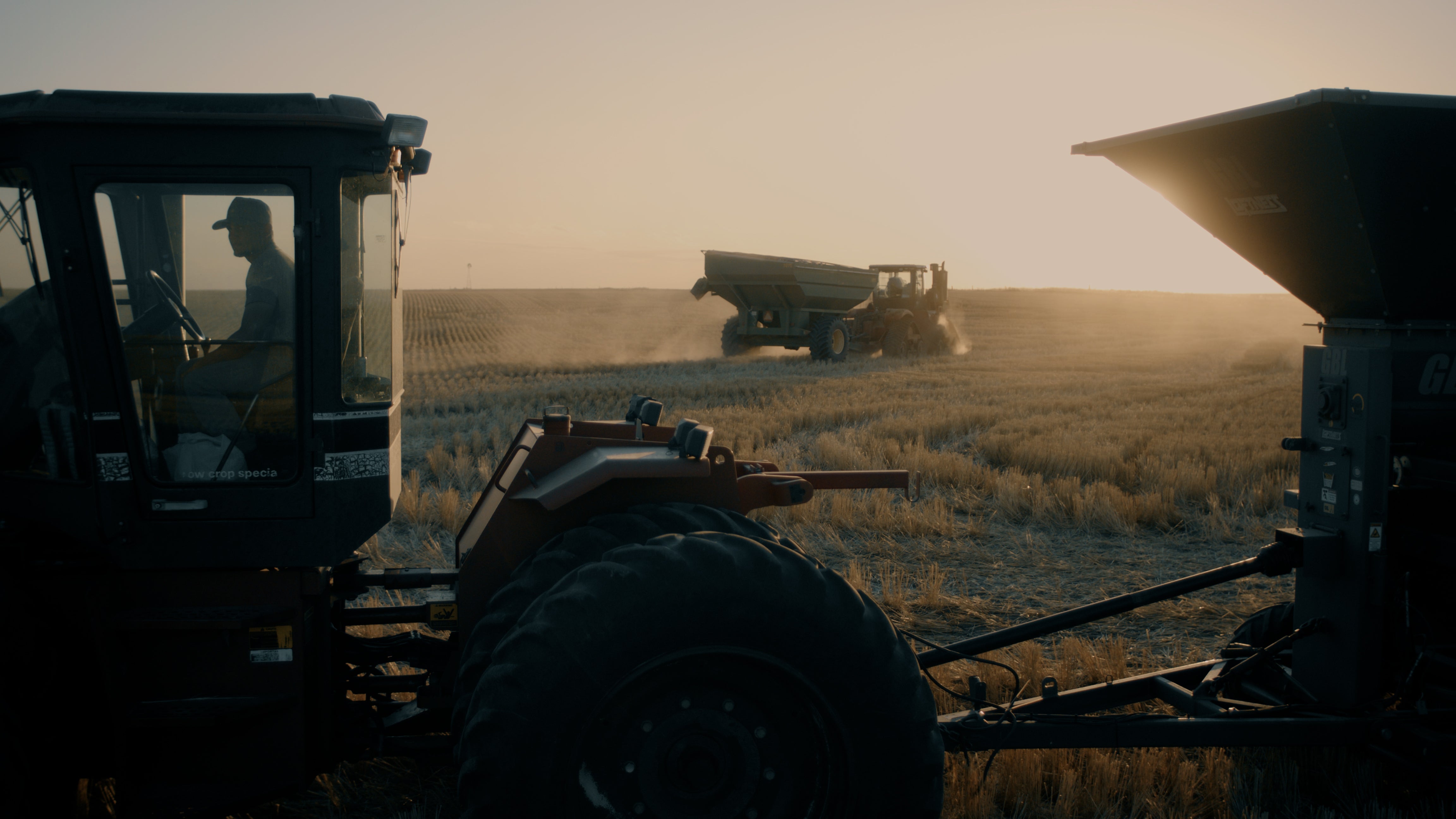
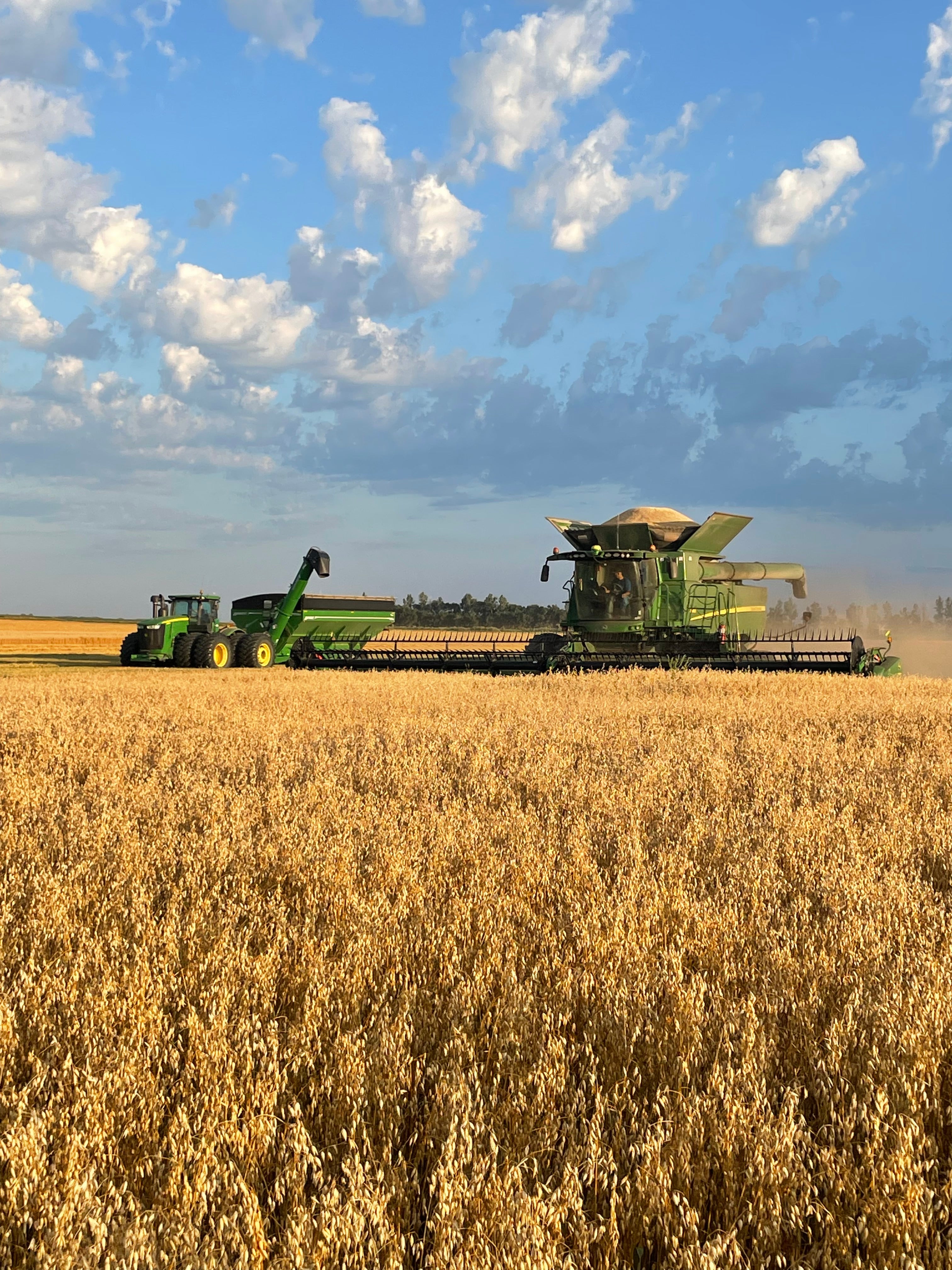
Pat Field and his family farms outside Pendroy, Montana, on ground his family has worked for four generations since the late 1800’s.
About eighteen years ago, he planted something almost nobody in America had heard of.
Camelina wasn't a wellness trend. It was an agronomic decision. Up here on the Rocky Mountain Front the season is short, the nights are cold, and water is never a sure thing.
Patrick needed a crop that could go in the rotation between wheat cycles — something that would hold the soil, take almost no water, and leave the ground in better shape than it found it.
Camelina did all three. What he didn't expect was the oil.
Cold-pressed straight off the farm, it came out light, clean, and unlike anything else in the pantry — an oil rich in omega-3 that you can actually cook with. Most oils make you choose. This one didn't.
The problem was that no one had heard of it. So the family did the only thing that made sense: grew it, pressed it, bottled it, and put their name on it.
Camelina Sun is that bottle. Same family, same section of ground, same press. From seed in the field to oil on your counter, it never leaves the farm.

Start here: ALA is essential. Literally.
Your body manufactures most of the fats it needs. There are two it can't.
One of them is alpha-linolenic acid — ALA, the plant omega-3. It is classified as an essential fatty acid for a precise reason: there is no metabolic pathway to build it. Every molecule of ALA in your body arrived there in food.
EPA and DHA, the omega-3s most people have heard of, are conditionally essential —the body can synthesize them, slowly and in limited quantity, from ALA. ALA has no such backup. It's the one you have to eat.
Camelina oil is one of the richest plant sources of it on earth.
The whole seed, not a fraction of it
Most omega-3 products are isolates. A source material gets concentrated, distilled, and stripped down until what's left is a single targeted compound in a capsule.
We press the seed and filter it. That's the intervention.
What survives is the full fatty acid profile the plant assembled — omega-3, -6, and -9 in the roughly 2:1:2 ratio camelina produces naturally, along with the seed's own antioxidants. Nothing added to it, nothing pulled out of it.
Most American diets run heavily omega-6 dominant. Camelina arrives on the other side of that ledger, in the proportions the plant grew it in.
Omega-3s are fragile. This one protects itself.
Here's a thing most people never hear: omega-3 fatty acids oxidize easily. Heat, light, and air degrade them, and a degraded omega-3 isn't doing anyone any good — which is why so many omega-3 products live in dark bottles in the back of the refrigerator.
Camelina comes with its own defense. The seed is naturally high in tocopherols — vitamin E — and they press out along with the oil. That built-in antioxidant load is why Camelina stays stable in a cupboard at room temperature while comparable plant omega-3 oils go off in weeks.
The omega-3 that's still intact when you swallow it is the only one that counts.
It comes from a field
Camelina is a flowering plant in the mustard family. It grows in the soil outside Pendroy, Montana, gets cold-pressed a short walk from where it was cut, and goes into a bottle.
There is no food chain involved. Nothing accumulates upward through one. What's in the bottle is what came out of the seed.
It's also, by definition, entirely plant-based — no animal input anywhere in the proces — and it's grown as a rotation crop that improves the ground it sits in rather than drawing down a wild population.
One more thing that makes this unusual
Nearly every concentrated omega-3 is something you take. This one is also something you cook with.Camelina holds a 475°F smoke point — high enough to sear, roast, and bake with — and it doesn't gel or solidify when chilled, so it works cold in dressings and marinades.
Light, faintly grassy, closer to almond than to olive.
Which means the easiest way to get ALA into your week isn't a routine you have to remember. It's the oil already sitting next to your stove.

The ground
Pendroy sits in Montana's Golden Triangle, up against the Rocky Mountain Front. It's wheat country — dry, wind-scoured, with cold nights that run late into spring.
That's hard on most crops. It suits camelina. The cold slows ripening, and slow ripening is what concentrates the oil in the seed. What makes this a difficult place to farm is exactly what makes the oil good.
How it's grown
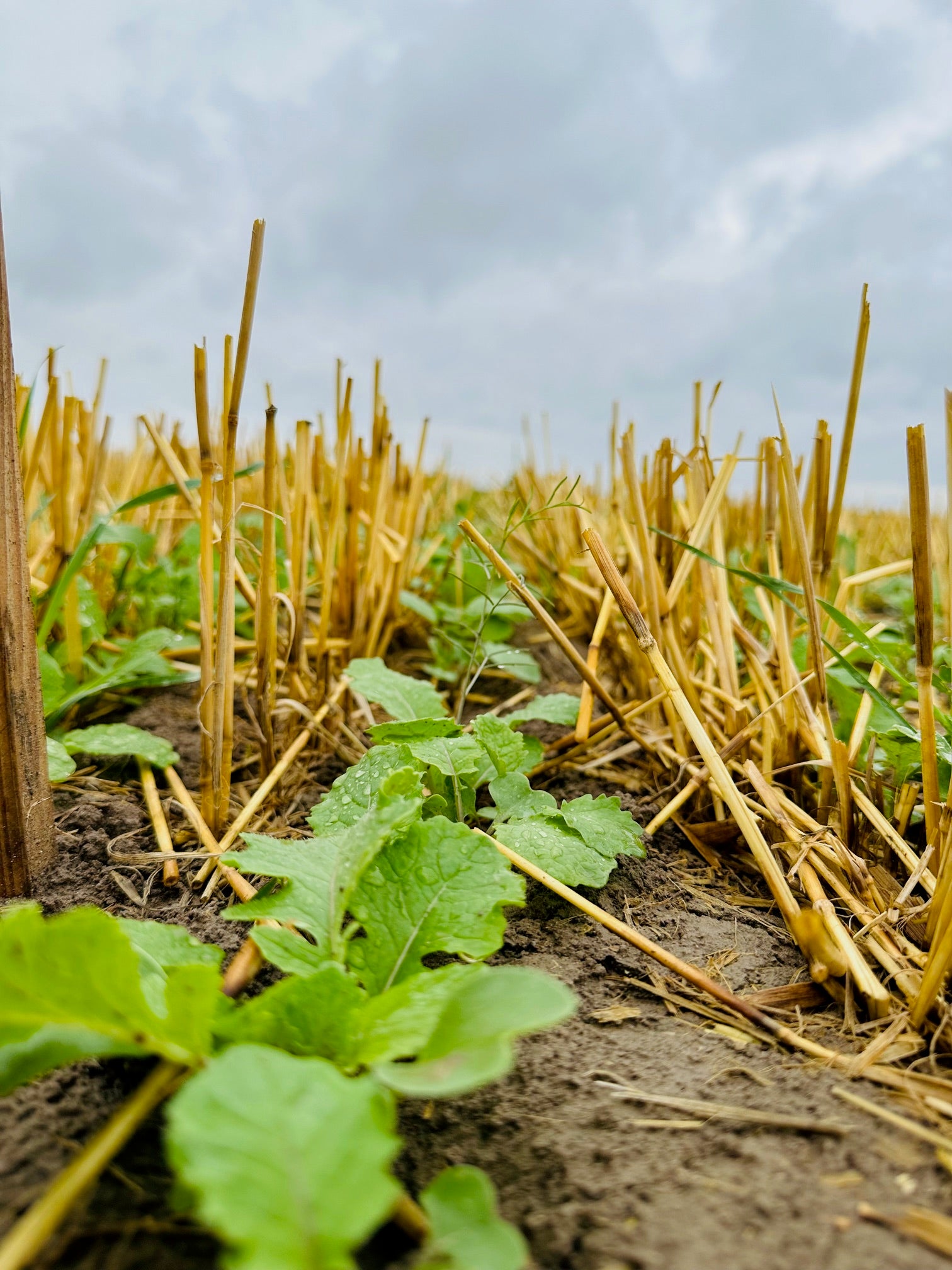
- In rotation, not instead of food. Camelina goes in between wheat cycles. It doesn't displace an acre of food production — it improves the acre it sits on.
- Low input. dryland / no irrigation.
- Non-GMO. Always.
- Early bloom. Camelina flowers before most crops in the region, which makes the field an early-season food source for pollinators when there isn't much else in bloom.
How it's pressed
Commodity seed oils are usually extracted with heat and a chemical solvent, then refined, bleached, and deodorized until nothing's left but fat.
We don't do any of that.
The seed goes into a screw press right here on the farm. No heat, no solvent, no refining. What comes out is filtered and liquid — and that's the whole process. It's why the oil still tastes like something.
Seed to liquid, without leaving the property
Grown here. Pressed here. Every bottle traces back to a field you could stand in.
There's no broker between Patrick's field and your kitchen, and there's no blending with oil from somewhere else. When a single family controls all of it, "traceable" stops being a marketing word and just becomes a description.
Field Notes
Read More